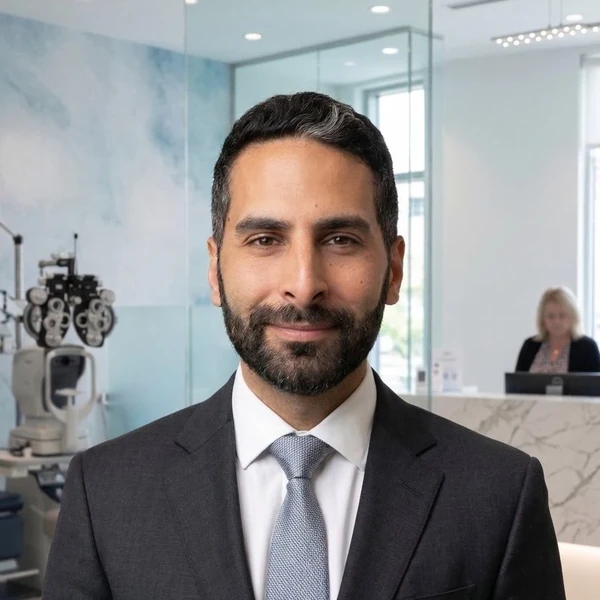
Dr Gozlan is an ophthalmic surgeon in Paris, holder of the University Diploma in Refractive Surgery and Phacoemulsification.
He corrects presbyopia with laser using Presby-LASIK and Presby-PKR — and, in the same session, any associated myopia, astigmatism or hyperopia — to free you from reading glasses.
Presbyopia appears around age 45 : the crystalline lens gradually loses its flexibility, the eye can no longer focus up close and reading becomes blurred. Laser presbyopia surgery reshapes the cornea to create a multifocal profile or a slight balance between the two eyes, thereby restoring comfortable near vision.
Two main corneal techniques exist: Presby-LASIK and Presby-PKR. Both use the excimer laser and correct presbyopia as well as associated refractive errors. When the crystalline lens has deteriorated significantly, lens surgery may be preferable: the preoperative assessment determines the safest solution for your eyes.
The gold-standard technique: a corneal flap created with a femtosecond laser and a multifocal profile, providing near and distance vision within the first few days.
Learn more → Presby-PKRThe surface treatment: no flap, ideal for thin corneas and contact-sport athletes. Recovery is slightly longer, but the outcome is equivalent.
Learn more →When presbyopia is very advanced or the crystalline lens begins to opacify, lens surgery may be offered instead of laser treatment. The preoperative assessment determines the best option.
Dr Gozlan is an ophthalmic surgeon in Paris 16, holder of the University Diploma in Refractive Surgery and Phacoemulsification (University of Toulouse) and dual-certified by the European Board of Ophthalmology. He dedicates his practice to the correction of presbyopia and refractive errors with laser.
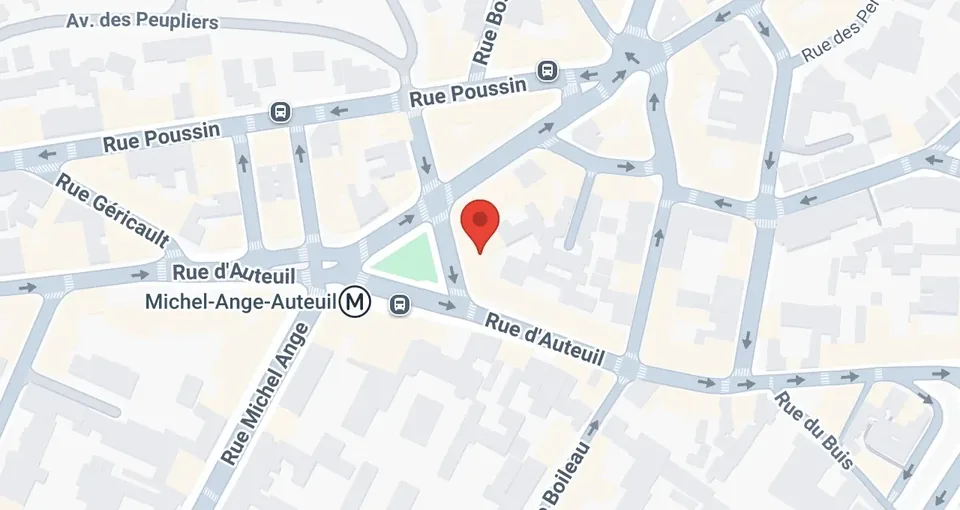
The consultation and preoperative assessment take place at the Cabinet Ophtalmologique Paris – Auteuil (Paris 16). The procedure is performed on an outpatient basis.
Yes. Presby-LASIK and Presby-PKR reshape the cornea to create a multifocal profile or to apply micro-monovision, restoring near vision while preserving distance vision. Eligibility is confirmed by a comprehensive preoperative assessment.
The goal is independence from glasses for most daily activities (reading, screens, driving). Some patients may still need a mild prescription for very fine tasks or in low-light conditions.
Presbyopia is caused by ageing of the crystalline lens, which continues over time. The laser correction compensates for the near-vision difficulty; over the years, if the lens deteriorates further (cataract), lens surgery can take over.
Yes. The same laser treatment corrects presbyopia and, in the same session, any associated myopia, astigmatism or hyperopia. This is one of the major advantages of corneal presbyopia surgery.
No, refractive surgery for presbyopia is not covered by the French national health insurance (Assurance Maladie). However, many supplementary insurance plans offer a dedicated "refractive surgery" allowance.